
The best festival tent isn’t necessarily the biggest or the most expensive. You need enough room for yourself and your bags, somewhere to put muddy boots, and something you can actually carry from the car park to the campsite.
I’ve used several tents at festivals, including the Eurohike Sendero 4 and Quechua Arpenaz 4.1 Fresh & Black. Below are the tents I’d consider for different group sizes, including ones I own and others I’ve compared using their specifications.
If you just want a recommendation, try the tent picker.
Find your perfect tent
Choose a number to see what I'd go for.
Just me
Best for: One person and their stuff
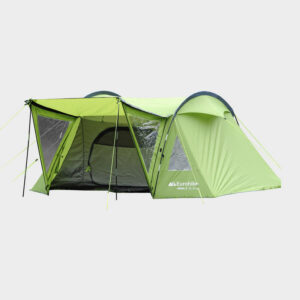
Eurohike Ribble 2 (opens in a new tab)
It's sold as a two-person tent, but it's just right for one person and their bags. It's light, quick to pitch, and the door can be rolled up, used as a porch or propped out on its poles as a sun shade.
- 4.5kg, and packs down to 57 x 17 x 17cm
- 3000mm flysheet and 5000mm sewn-in groundsheet
- Flysheet-first pitching, so the inner stays dry if it rains while you pitch
- A squeeze for two people with festival luggage
2
Best for: Two people
Coleman Coastline 3 Plus (opens in a new tab)
A three-person tunnel tent with a covered living area at the front, which gives two people room for their bags and somewhere dry to sit. Three people will fit, but it's a squeeze once your luggage is in.
- 3000mm waterproof rating, with taped seams
- Fibreglass poles that pitch easily
- Large window lets light into the living area
- 7.2kg, so it's not the lightest
- In heavy rain, water can pool in the porch, so keep bags in the bedroom
Want more comfort? The Arpenaz 4.1 Fresh & Black costs more than the Coastline, but you get a much darker bedroom and a living area you can stand up in.
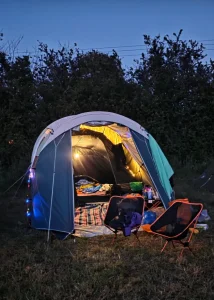
Best for: Two or three people who want more comfort
Quechua Arpenaz 4.1 Fresh & Black (opens in a new tab)
One of my own tents. The Fresh & Black bedroom is much darker than a standard tent and is designed to stay cooler in the sun, and the living area is big enough to stand up in. It's sold as a four-person tent, but it's most comfortable for two or three.
- Much darker bedroom (Decathlon says it blocks 99% of daylight)
- Stand-up living area of 5 square metres
- Colour-coded poles make it easy to pitch
- 11.5kg, so plan how you'll carry it
- One big bedroom, so no privacy if you share with friends
3
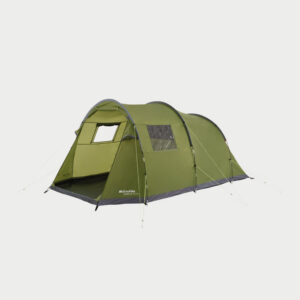
Best for: Three friends, or a couple who want space
Eurohike Sendero 4 (opens in a new tab)
This is the tent I use when I go with friends. It's simple and good value, with a big bedroom and a porch for muddy boots and bags. It's best for three people, or two who want room to spread out.
- Bedroom is 210 x 240cm, with 170cm head height
- Sewn-in groundsheet keeps out draughts and bugs
- Luminous guy lines, so people are less likely to trip over them in the dark
- 9kg is heavy to carry a long way
- The current listing gives a 2000mm waterproof rating, which is the minimum I'd want
Want more comfort? The Arpenaz 4.1 Fresh & Black is heavier than the Sendero, at 11.5kg, but you get a much darker bedroom and a living area you can stand up in.
Best for: Two or three people who want more comfort
Quechua Arpenaz 4.1 Fresh & Black (opens in a new tab)
One of my own tents. The Fresh & Black bedroom is much darker than a standard tent and is designed to stay cooler in the sun, and the living area is big enough to stand up in. It's sold as a four-person tent, but it's most comfortable for two or three.
- Much darker bedroom (Decathlon says it blocks 99% of daylight)
- Stand-up living area of 5 square metres
- Colour-coded poles make it easy to pitch
- 11.5kg, so plan how you'll carry it
- One big bedroom, so no privacy if you share with friends
4
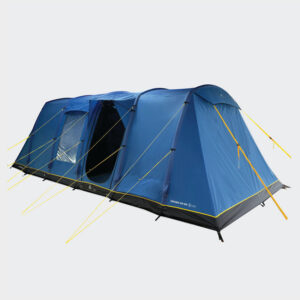
Best for: Four people, or two couples
Hi-Gear Zenobia Eclipse 6 (opens in a new tab)
Two darkened bedrooms at either end and a big living area in the middle, so two couples or four friends each get their own space and somewhere to sit together. You can stand up throughout.
- Two 'Eclipse' darkened bedrooms
- 4000mm waterproof rating
- 195cm standing height
- 19.2kg, so you'll want a trolley
- Takes about 30 minutes and more than one person to pitch
Or take two smaller tents. They’re much easier to carry and pitch.
5 or 6
My recommendation: take two tents instead of one enormous one.
Splitting into two groups of two or three usually makes transport, pitching and campsite space easier. If you specifically want a single large tent, check its weight and the festival’s pitch restrictions first.
If you do want everyone under one roof:
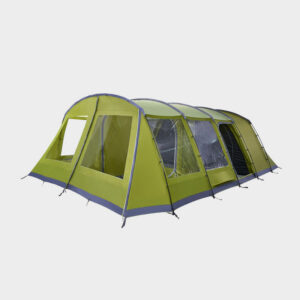
Best for: A big group
Vango Casa Lux (opens in a new tab)
A properly luxurious tent, with two king-size blackout bedrooms and a huge living area with big windows. It's also an absolute beast. I can't even lift it in its bag, so you'll need a trolley and a few friends.
- Sleeps 7 to 8, with 2 bedrooms and 2 doors
- 'Lights Out' darker bedrooms
- Pitches in about 20 minutes with a few people
- 30.3kg packed
- Expensive
The picker is a starting point. If you’re travelling by public transport or have a long walk from the car park, pay particular attention to the packed weight.
What Size Tent Do You Need for a Festival?
The number of people printed on a tent’s bag usually tells you how many can sleep in it, not how many can sleep comfortably with several days’ worth of luggage.
For festival camping, I’d normally suggest:
| People sharing | Tent size I’d consider |
|---|---|
| Just you | 2-person |
| Two people | 3-person |
| Three people | 4-person |
| Four people | 6-person, or two smaller tents |
| Five or six people | Two tents, unless you’ve got a good reason to share one large tent |
These aren’t strict rules. A two-person tent can sleep two people, but once you’ve added bags, sleeping mats and wet clothes, there won’t be much spare space.
A separate porch makes a bigger difference than you might think. It’s somewhere to leave muddy boots and coats without bringing everything into your bedroom.
Before buying an enormous tent, though, check your festival’s camping rules. Some festivals restrict tent sizes or ask people to use only the space they need.
What Actually Matters in a Festival Tent?
Weight and packed size
This is one of the first things I’d check.
At Glastonbury and other large festivals, you can have a long walk between the car park and your campsite. A tent that’s easy to carry from your front door to the car might feel very different after half an hour across fields.
A tent weighing 4–5kg is much easier to manage than one weighing 15–20kg, particularly when you’re carrying the rest of your camping gear.
If you’re taking a heavy family tent, plan how you’re going to transport it. A festival trolley might be worth bringing.
Rain protection and ventilation
Look for a properly waterproof flysheet, well-sealed seams and a groundsheet that will keep the sleeping area dry.
You’ll see waterproof ratings such as 2000mm, 3000mm and 4000mm. These measure the water pressure the fabric can withstand, but a higher number doesn’t automatically mean the whole tent is better in the rain. The seams, zips and how you pitch it matter too.
I generally prefer double-skin tents, with a separate inner bedroom and outer flysheet. That arrangement helps manage condensation, although ventilation is still important. Even a waterproof tent can be damp inside after a night with the vents shut.
A bedroom you can actually sleep in
Darkened bedrooms are one of my favourite tent features.
At a summer festival, daylight arrives ridiculously early. A darkened bedroom won’t guarantee a lie-in, and it won’t stop a tent warming up completely, but I find it makes sleeping after sunrise much more comfortable.
Headroom matters too. Being able to stand up while getting dressed is a luxury you’ll appreciate after several nights in a field.
My Festival Tent Recommendations
The Sendero 4 and Arpenaz 4.1 below are tents I personally use. The other recommendations are based on their published specifications rather than my own overnight testing. Product details were checked against retailer listings in November 2026.
| Tent | Best for | Weight | Darkened bedroom | Price |
|---|---|---|---|---|
| Eurohike Ribble 2 | 1 person | 4.5kg | No | £110 |
| Coleman Coastline 3 Plus | 2 people | 7.2kg | No | About £145 |
| Eurohike Sendero 4 | 3 people | 9kg | No | £200 |
| Quechua Arpenaz 4.1 Fresh & Black | 2–3, for comfort | 11.5kg | Yes | £200 |
| Hi-Gear Zenobia Eclipse 6 | 4 people | 19.2kg | Yes, both | £450 |
| Eurohike Pop 200 (basic pop up tent) | 1 person | Not listed | No | £60 |
Best for One Person: Eurohike Ribble 2
My pick for: A solo festivalgoer who wants room for luggage
The Ribble 2 is sold as a two-person tent, but I’d treat it as a comfortable one-person option.
At 4.5kg, it’s reasonably manageable for festival camping, and the adaptable front door gives you a small sheltered area rather than just an entrance straight into the bedroom.
The flysheet pitches first, with the inner bedroom attached. That’s a useful design if you arrive in the rain.
What I like about the specifications:
- 4.5kg packed weight
- 3000mm flysheet and 5000mm groundsheet ratings
- Compact 57 × 17 × 17cm pack size
- Adaptable door and porch arrangement
The compromise: It’s still a compact tent. Two people could sleep in it, but they’d have little room for festival bags.
Eurohike Ribble 2 (opens in a new tab)
- Sleeps: 2 (comfortable for 1)
- Weight: 4.5kg
- Packed size: 57 × 17 × 17cm
- Waterproofing: 3000mm flysheet, 5000mm groundsheet
Best for Two People: Coleman Coastline 3 Plus
My pick for: A couple wanting a separate living area
A three-person tent is often a good choice for two festivalgoers, and the Coastline 3 Plus has the advantage of a covered porch.
That means you don’t have to keep every bag, coat and pair of shoes inside the sleeping compartment. There’s also a large window in the living area, which makes it feel less enclosed.
Coleman lists a 3000mm waterproof flysheet with taped seams.
The useful features:
- Three-person sleeping capacity
- Separate covered living area
- 3000mm waterproof rating
- Fibreglass poles and taped seams
The compromises: At around 7kg, it’s quite a bit heavier than the Ribble. It also doesn’t have a blackout bedroom.
I’d choose this for the extra living space, not because it’s the lightest option.
Coleman Coastline 3 Plus (opens in a new tab)
- Sleeps: 3
- Weight: 7.2kg
- Waterproofing: 3000mm, taped seams
- Living space: covered porch with a large window
Best for Three Friends: Eurohike Sendero 4
My pick for: Three people sharing, or two who want more room
This is one I actually use when I go to festivals with friends.
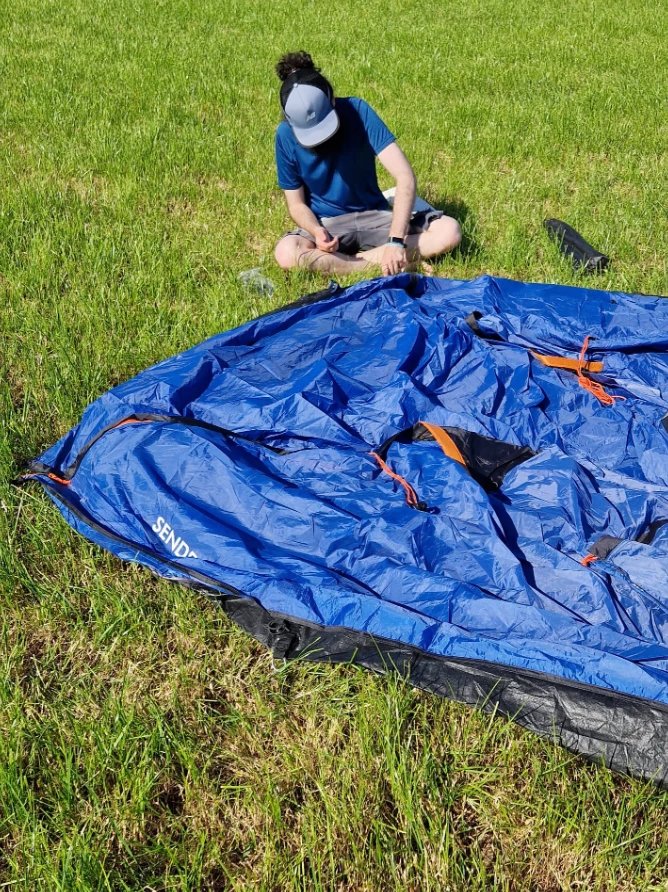
It’s a straightforward four-person tent with one big bedroom and a separate porch. I like having somewhere to keep bags and muddy shoes away from the sleeping area.
The bedroom measures 210 × 240cm, and the tent has 170cm of headroom. It’s a practical layout for three people without needing an enormous family tent.
The bright guy lines are another useful feature on a crowded festival campsite, particularly when you’re trying to find your way back in the dark.
What works for me:
- Plenty of bedroom space for a smaller group
- A separate porch for muddy gear
- Straightforward design
- Visible guy lines
The compromises: It weighs around 9kg, so it isn’t something I’d want to carry a long distance along with several bags. The 2000mm waterproof rating is fairly basic compared with some more expensive tents.
In practice, though, ours didn’t let any rain in when it poured on us at Glastonbury 2023. You can hear it in the video above.
Eurohike Sendero 4 (opens in a new tab)
- Sleeps: 4
- Weight: 9kg
- Bedroom: 210 × 240cm, 170cm head height
- Waterproofing: 2000mm
Best Blackout Tent: Quechua Arpenaz 4.1 Fresh & Black
My pick for: Two or three people who want more comfort
This is another tent I own, and the Fresh & Black bedroom is the main reason I’d recommend it.
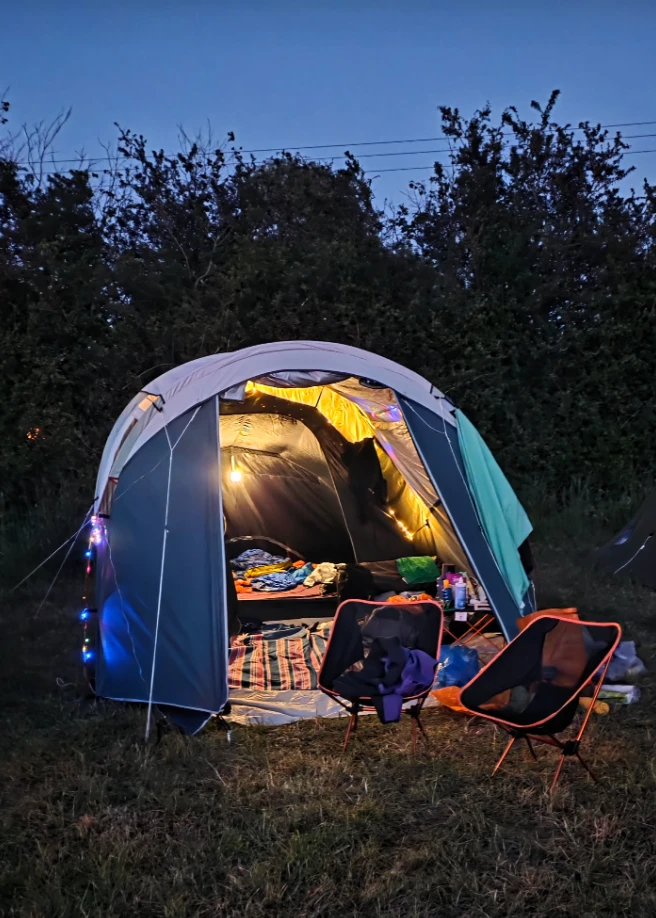
Decathlon’s fabric blocks much of the daylight and is designed to reduce heat building up in direct sunshine. For me, that makes a noticeable difference when I’m trying to sleep after sunrise.
The other big advantage is the living space. It has a five-square-metre living area with enough height to stand up, so you can get dressed, organise your belongings and shelter from the weather without crouching in the bedroom.
The sleeping area is one large room, rather than separate bedrooms.
What I like:
- Much darker bedroom than a standard tent
- Spacious standing-height living area
- Colour-coded poles
- Separate bedroom and living space
The compromises: It weighs 11.5kg, so transport needs some thought. And although it’s sold as a four-person tent, I wouldn’t choose it for four friends who want privacy.
I don’t earn anything from this link: Decathlon isn’t an affiliate of mine. It’s here because it’s the tent I’d pick for comfort.
Quechua Arpenaz 4.1 Fresh & Black (opens in a new tab)
- Sleeps: 4, in one bedroom
- Weight: 11.5kg
- Bedroom: Fresh & Black blackout fabric
- Living area: 5m², with standing height
Best for Four People Sharing One Tent: Hi-Gear Zenobia Eclipse 6
My pick for: Four friends or two couples who want separate bedrooms
If four people want to share one tent, a six-person model makes much more sense than squeezing into a four-person bedroom with all your luggage.
The Zenobia Eclipse 6 has two darkened bedrooms at opposite ends, separated by a communal living area. That layout gives people more privacy than a single-bedroom family tent.
There’s also enough height to stand up comfortably.
Useful specifications:
- Six-person capacity
- Two separate darkened bedrooms
- 4000mm flysheet rating
- 195cm standing height
The big drawback: It weighs 19.2kg and the retailer estimates around 30 minutes to pitch it.
That’s a substantial tent to transport. I’d only consider it if you’re happy carrying the weight, have somewhere suitable to pitch it and genuinely want everyone sleeping together.
For many groups of four, two smaller tents would be the easier option.
Hi-Gear Zenobia Eclipse 6 (opens in a new tab)
- Sleeps: 6, in two darkened bedrooms
- Weight: 19.2kg
- Waterproofing: 4000mm
- Standing height: 195cm
What About Five or Six Friends?
For a group this size, I’d usually recommend two smaller tents rather than one enormous family tent.
You can divide the weight between people, pitch them separately and avoid having to find one huge space in an already crowded campsite.
You also get a little more privacy.
A large eight-person family tent might make sense for a relaxed camping holiday, but it isn’t automatically the best choice for a music festival where you could be carrying everything across fields.
If you do want everyone under one roof, check the packed weight, pitch dimensions and your festival’s rules before buying.
Advert
Are Pop-Up Tents Any Good for Festivals?
Pop-up tents have one very obvious advantage: you can have them standing in seconds.
The disadvantages are usually the packed shape, the limited living space and, with some cheaper single-skin designs, condensation.
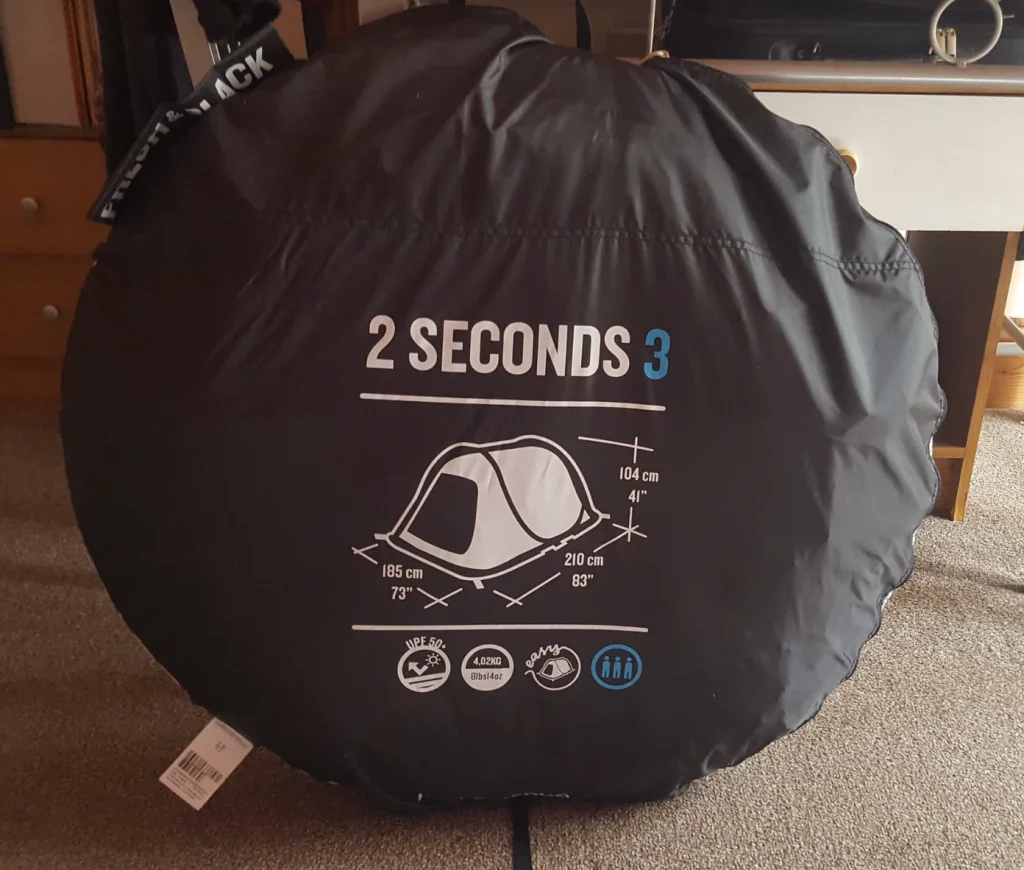
A single-skin tent isn’t automatically useless in wet weather. But I’d be cautious about relying on a very basic pop-up for a long festival, particularly if rain is forecast.
Budget Option: Eurohike Pop 200
For a short festival or a dry-weather weekend, the Eurohike Pop 200 is worth considering if your priority is keeping costs down.
It’s a simple two-person pop-up with a 2000mm waterproof rating and taped seams.
I’d think of it primarily as a solo sleeping tent rather than comfortable accommodation for two people and several days of luggage.
The compromise: Its single-skin construction means managing condensation is especially important, and its flat packed shape can be awkward to transport.
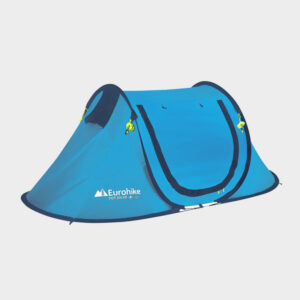
Eurohike Pop 200 (opens in a new tab)
- Sleeps: 2 (comfortable for 1)
- Type: single-skin pop-up
- Waterproofing: 2000mm, taped seams
- Groundsheet: sewn in
Pitch Your Tent Before the Festival
Whatever tent you choose, put it up at home before you take it to a festival.
Check that all the poles, pegs and guy lines are there. Make sure you know how the doors and vents work, and learn how to pack it away.
If you’re using a tent you already own, inspect it for damaged seams, broken poles or missing parts. Here’s my guide to repairing a festival tent.
And don’t buy a cheap tent on the assumption that you can abandon it afterwards. Take your tent home, dry it properly and use it again.
Festival Tent FAQs
Is a two-person tent big enough for two people?
Usually, yes, but it can be cramped once you’ve brought bags and other equipment inside. For two people staying several nights, I’d generally choose a three-person tent if weight and space allow.
How waterproof should a festival tent be?
A flysheet rated at 2000mm is a reasonable starting point for a budget UK camping tent, but don’t judge waterproofing by that number alone. Check the seams, groundsheet, door design and ventilation too.
Should I bring one big tent or several smaller ones?
For a group of friends, I’d usually favour smaller tents. They’re easier to transport and arrange on a busy campsite. A larger tent makes sense if you really want communal living space and can manage its weight.
Can I leave my tent at the festival?
No. Take it home with you, along with your other camping equipment. Even if a festival has a collection scheme, don’t assume abandoned tents will be reused or donated. Read more about what happens to abandoned festival tents.
Is it safe to sleep in a tent at a festival?
Generally, yes. Theft from tents does happen, so keep valuables on you or in a locker rather than in your tent. Don’t padlock your tent either, because it just tells people there’s something worth taking. How to keep your valuables safe at festivals.
My Final Advice
If you’re choosing your first festival tent, don’t get carried away by the number of people it claims to sleep.
Think about how far you’ll have to carry it, how much luggage you’re bringing, whether you want a porch and whether you’ll appreciate a darker bedroom after a late night.
I’d rather have a manageable tent with enough space for my belongings than a huge one that’s miserable to carry.
And whatever you buy, take it home afterwards.
See you in a field!
How I Chose These Tents
I’ve used the Eurohike Sendero 4 and the Quechua Arpenaz 4.1 Fresh & Black at festivals myself, so what I say about those two comes from camping in them. I chose the others from their published specifications, looking at how well they suit festival camping: room for your bags, a porch, how portable they are and whether they’re good value. I checked every tent’s details and price against the retailer’s own listing in November 2026.